Leadership isn’t about being loud.
It’s about knowing when to be loud.
And when to be quiet enough to let others speak.
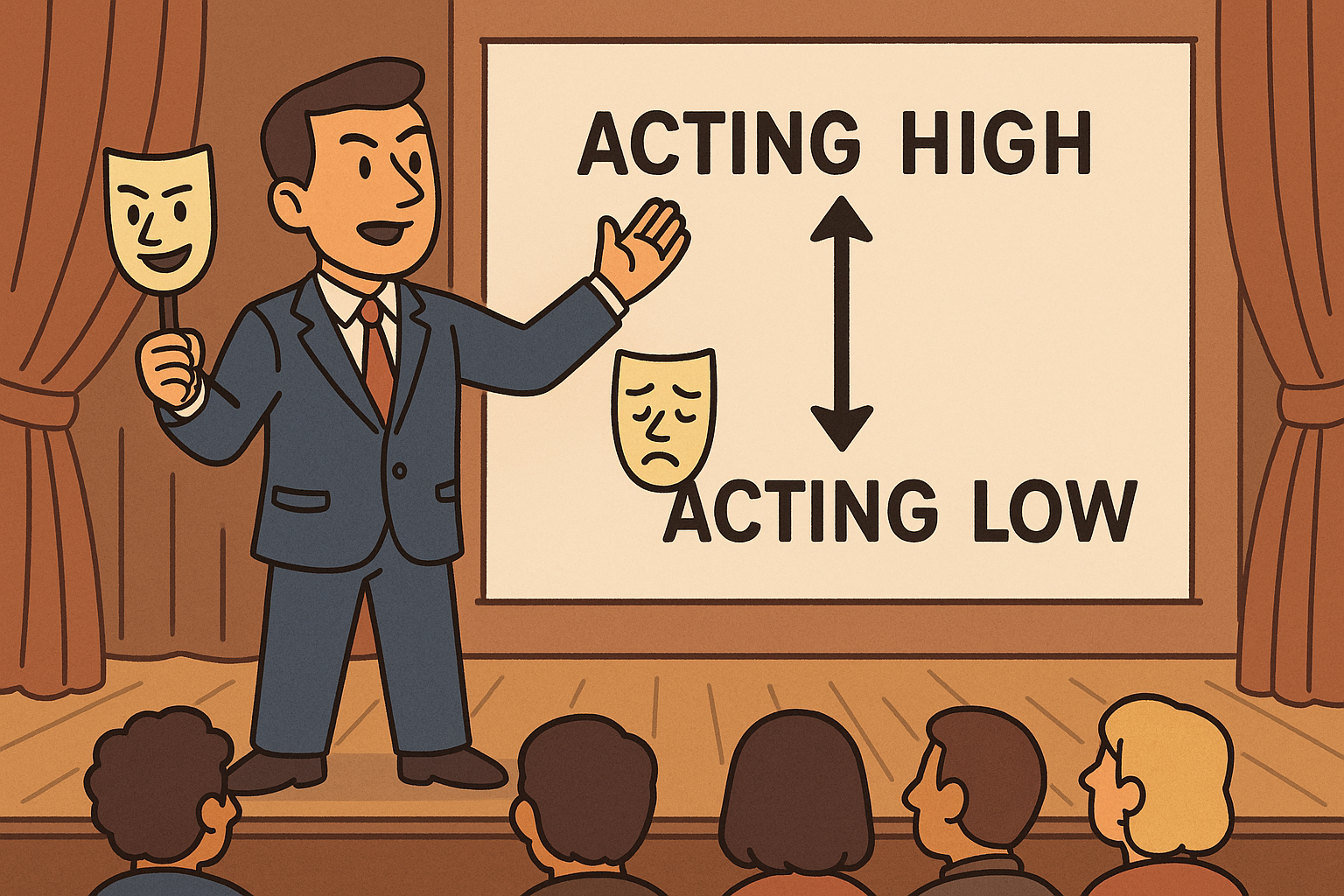
The best leaders aren’t always the smartest person in the room — they’re the ones who know when to act high and when to act low.
🎭 The Art of Acting High
Sometimes, leadership demands strength.
Decisiveness. Presence.
Moments where people are looking for direction — and you have to become the voice that steadies the room.
That’s acting high.
It’s when you:
- Speak with conviction even if your plan isn’t perfect.
- Hold your ground during chaos.
- Step forward when others hesitate.
- Bring energy when the team feels drained.
You’re not pretending — you’re amplifying.
You’re showing people that uncertainty doesn’t have to sound like panic.
In moments of doubt, people don’t follow the best idea.
They follow the calmest voice.
That’s what acting high means — not dominance, but stability.
🧩 The Art of Acting Low
Then there are moments where leadership requires the opposite: humility, vulnerability, stillness.
That’s acting low.
It’s when you:
- Listen more than you speak.
- Admit when you don’t know.
- Ask for help instead of pretending you don’t need it.
- Let someone else shine — even if you could have taken the credit.
Acting low isn’t weakness — it’s wisdom.
Because authority without humility is noise.
Real leadership means your team doesn’t just hear your confidence — they feel your care.
⚖️ Why Range Matters
The best leaders move fluidly between both states — like a dimmer switch, not an on/off button.
Too much “acting high”, and you become intimidating.
Too much “acting low”, and you become invisible.
Balance is everything.
Sometimes your team needs a shield; other times, they need a mirror.
Leadership is not about always being strong — it’s about being strong for something.
🧠 How to Know Which One You Need
A simple test:
When the room is silent from fear — act high.
Show confidence. Take ownership. Give direction.
When the room is silent from exhaustion — act low.
Show empathy. Pause. Let others breathe.
Your presence should always match what the moment lacks.
🪞 The Subtle Power of Controlled Contrast
People remember contrast — not constancy.
A leader who’s always loud fades into background noise.
A leader who’s always soft becomes easy to ignore.
But one who can shift —
from decisive to reflective,
from confident to curious —
builds both trust and influence.
Because they remind everyone that leadership isn’t a role — it’s a response.
💡 The Takeaway
There’s no single “leadership voice.”
There’s just the ability to read the room, own your tone, and adapt your energy to what others need.
So the next time you walk into a meeting, don’t ask, “What should I say?”
Ask, “What does this moment need me to be?”
Sometimes strong.
Sometimes soft.
Always intentional.
🎭 Act high enough to be heard.
Act low enough to be trusted.