Most systems fail quietly — not because they couldn’t scale, but because someone forgot to care.
We talk a lot about performance, scalability, resilience.
But the one word rarely mentioned in design reviews is empathy.
And yet, it’s often the most crucial ingredient in building software that actually lasts.
Because every good system is ultimately a conversation — not between servers, but between humans.
🌉 The Wall Builder
Every team has known one.
The engineer who builds elegant systems… that only they can understand.
The person who insists their architecture diagram is “self-explanatory” — until you realize it looks like a Jackson Pollock painting of microservices.
These are the wall builders.
They design defensively.
They protect complexity like a secret recipe.
Their APIs are technically perfect but emotionally hostile — filled with cryptic field names, half-documented configs, and logs that sound like riddles.
When they move to another project, the rest of the team just stares at their legacy and whispers:
“I hope they’re happy wherever they are.”
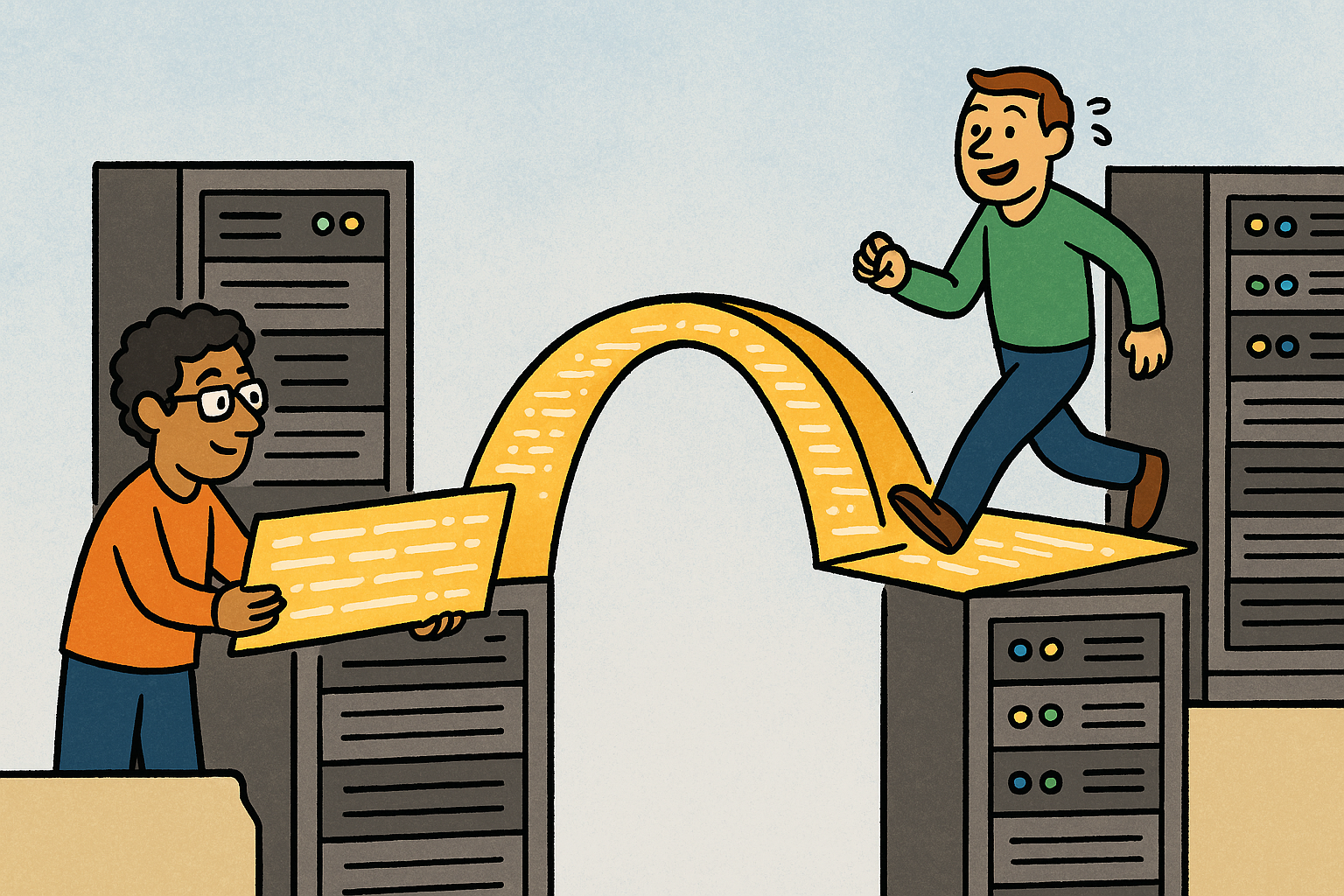
🧭 The Bridge Builder
Then there’s the other kind — the quiet engineer who designs systems that feel understandable even before you read the docs.
Their code has empathy baked in:
- Clear names instead of clever ones.
- Comments that teach, not flex.
- Interfaces that say, “Hey, I thought of you.”
Bridge builders don’t design for themselves.
They design for the next person — the one who will try to debug it at 3 AM when PagerDuty calls, half-asleep and caffeinated.
Because they know what it feels like to be that person.
🧩 Empathy as an Engineering Skill
Empathy isn’t soft.
It’s structural.
When you think about who’s on the other side of your design:
- You write clearer APIs.
- You add better logs.
- You make failure modes graceful, not catastrophic.
You stop coding to impress and start coding to communicate.
Great systems aren’t just fault-tolerant — they’re human-tolerant.
🧠 A Lesson From Bridges
Real bridges are designed for people who’ll never meet the architect.
Drivers trust them blindly, in rain or traffic or fatigue, and the bridge just… works.
That’s engineering empathy in steel.
Software bridges are no different.
When you design with empathy, you build trust at scale — between developers, teams, and future maintainers you’ll never meet.
And that’s how good engineering becomes legacy, not debt.
💡 The 3 AM Rule
Next time you’re designing a new service, ask yourself:
“If someone had to debug this at 3 AM — what would I want them to see?”
That one question is enough to change your design approach.
You’ll simplify logs, rename variables, add retry logic — not because it’s elegant, but because it’s kind.
And kindness, in engineering, is underrated architecture.
🧱 The Takeaway
Walls isolate. Bridges connect.
Bad code hides complexity; good code shares understanding.
The best engineers know:
- Systems are for people.
- Clarity outlives cleverness.
- And empathy scales better than optimization.
Because someday, somewhere, someone will walk across the bridge you built —
and if it doesn’t collapse,
they’ll silently thank you before pushing the next release.
🌉 Build systems that make humans feel seen — not stupid.