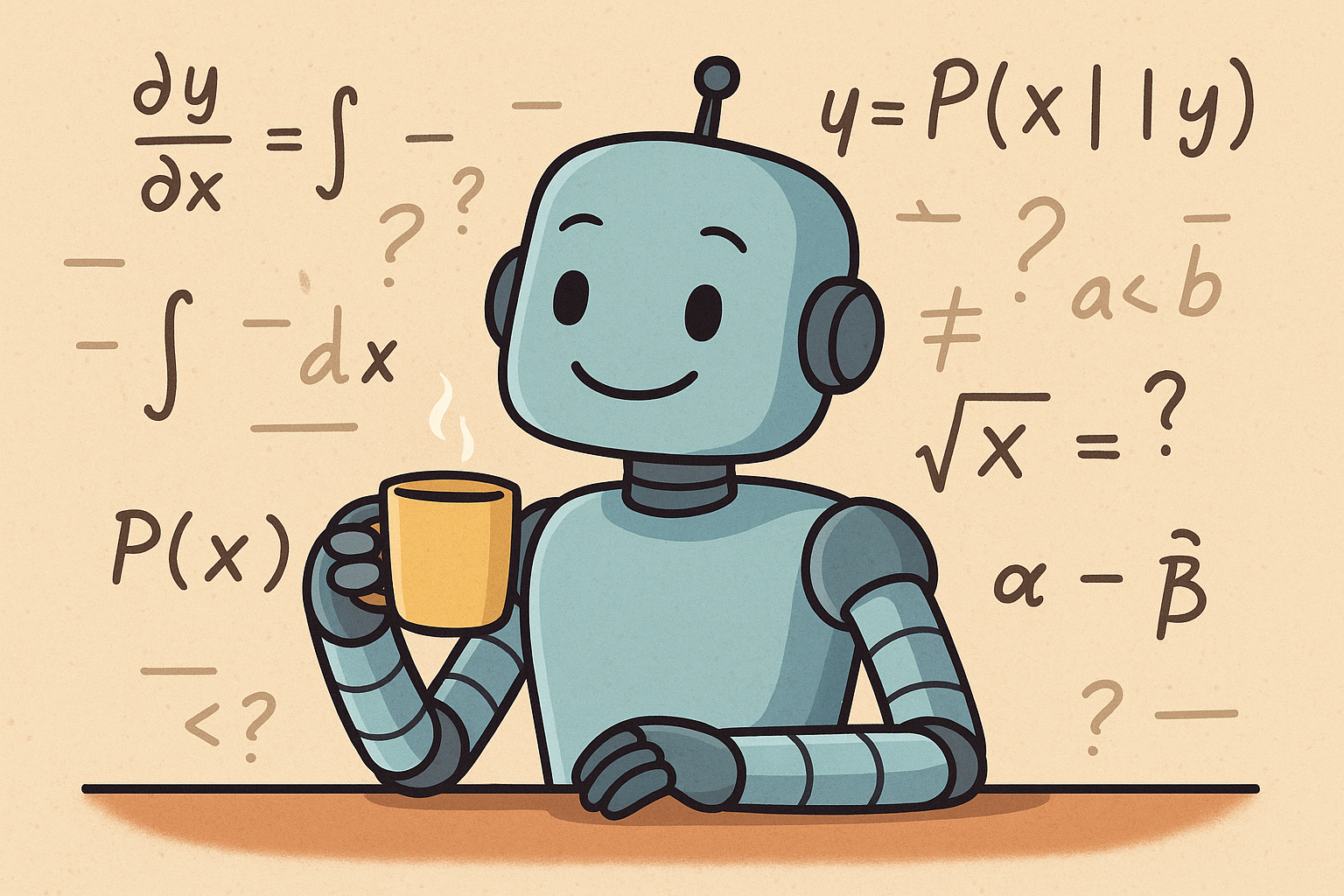
Most of us were taught that intelligence means knowing everything.
Top of the class. Full marks. No mistakes.
Then along comes artificial intelligence — a machine that thrives on not knowing everything.
It just guesses.
Statistically. Confidently. Relentlessly.
And somehow… it works.
🎯 The Genius That Doesn’t Think — It Predicts
Large language models don’t “know.” They predict.
Every word they write is a calculated probability:
“What’s the most likely word to come next?”
That’s it.
No truth. No emotion. No soul.
Just a massive math engine spinning sentences into existence.
But here’s the twist:
That same messy, probabilistic mechanism is why they sound intelligent.
Because the world isn’t perfect.
And intelligence — real intelligence — is often about making peace with uncertainty.
🧠 The Human Obsession With Knowing
Humans, on the other hand, hate uncertainty.
We build checklists, policies, process documents — anything to avoid saying, “I’m not sure.”
But the irony is: every major breakthrough started with those three words.
“I’m not sure why this apple fell.”
“I’m not sure if this code will scale.”
“I’m not sure if this is love or caffeine.”
Uncertainty drives curiosity.
Curiosity drives learning.
Learning drives intelligence.
AI reminds us that not knowing isn’t failure — it’s fuel.
🤖 How AI Embraces Imperfection
Think of how these models are trained.
They consume billions of words, make billions of mistakes, and get nudged a little closer to “right” each time.
No one tells them “you’re dumb.”
They just iterate.
It’s the ultimate growth mindset — powered by math.
An algorithmic shrug that says, “I’ll get it next time.”
If humans approached learning this way, we’d probably stress less and innovate more.
Instead, we chase certainty like it’s a moral virtue — when even our smartest creations survive by guessing well.
🧩 The Lazy Part Isn’t an Insult
AI doesn’t brute-force truth.
It samples it — lazily, beautifully, probabilistically.
That laziness is its superpower.
It doesn’t waste energy memorizing everything; it spends it connecting patterns.
Humans do this too when we’re at our best.
When we feel something’s off in a design.
When we sense an idea is right before data catches up.
That’s intuition — our own built-in probability engine.
So maybe we’re not so different from these models after all.
We’re just messier, slower, and occasionally poetic about it.
🪞 What AI Really Teaches Us
AI isn’t here to replace us.
It’s here to hold up a mirror — to show us that intelligence isn’t about omniscience.
It’s about graceful guessing.
The smartest systems don’t know everything.
They know enough to move forward — and adjust along the way.
So next time you freeze in a meeting because you don’t have the “perfect” answer, remember this:
Even the most advanced AI in the world is just… making an educated guess.
And that’s okay.
Because maybe the future doesn’t belong to those who know the most —
but to those who dare to predict, learn, and improve the fastest.
🧠 Intelligence was never about knowing. It was about noticing what’s worth knowing next.